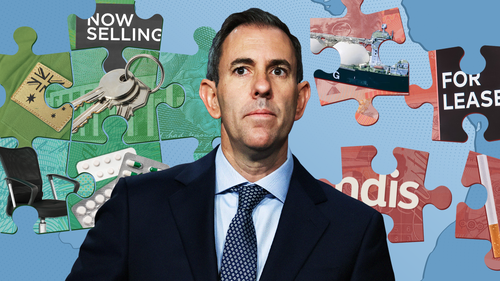
<div class="block-content"><div class="styles__Container-sc-1ylecsg-0 goULFa"><span>Treasurer Jim Chalmers has handed down a federal budget which he is touting as the most significant of the 21st century, as he and Prime Minister Anthony Albanese attempt to thread a needle that entwines cost of living support, tax reform and better local resilience – all without making already-bad inflation even worse.</span></div></div><div class="block-content"><div class="styles__Container-sc-1ylecsg-0 goULFa"><span>The bottom line has picked up slightly, sitting at a deficit of $31.5 billion instead of the previously-forecast $34.3 billion.</span></div></div><div class="block-content"><div class="styles__Container-sc-1ylecsg-0 goULFa"><span>Under pressure to rein in government spending, Chalmers has found a fresh $63.8 billion of "savings and reprioritisations", while spending as a proportion of GDP will drop from 26.8 per cent next year to 26.2 per cent in 2029-30.</span></div></div><div><div id="adspot-mobile-medium"></div></div><div class="block-content"><div class="styles__Container-sc-1ylecsg-0 goULFa"><strong><span>READ MORE: </span></strong><a href="https://www.9news.com.au/national/federal-budget-2026-government-unveils-250-dollar-tax-relief-minimum-tax-on-wealth-trusts/885f4657-b89b-431d-8f0d-330459a1dfe9" rel="" target="" title="More than 13 million Aussies to get $250 tax bonus"><strong><span>More than 13 million Aussies to get $250 tax bonus</span></strong></a><strong></strong></div></div><div class="block-content"><div class="styles__Container-sc-1ylecsg-0 goULFa"><span>At the forefront of tonight's announcements are a suite of largely expected policies.</span></div></div><div class="block-content"><div class="styles__Container-sc-1ylecsg-0 goULFa"><span>On the one hand, changes to negative gearing, the capital gains tax discount and discretionary trusts will provide Treasury with a much-needed boost to its coffers.</span></div></div><div class="block-content"><div class="styles__Container-sc-1ylecsg-0 goULFa"><span>On the other, workers and small businesses will have the favour returned thanks to some freshly minted tax cuts.</span></div></div><div><div class="OUTBRAIN" data-reactroot="" data-src="//www.9news.com.au/national/federal-budget-2026-winners-losers-workers-first-home-buyers-property-investors-ndis/55ede4e3-2ea7-4315-93f9-0f08ca98d2b3" data-widget-id="AR_5"></div></div><div class="block-content"><div class="styles__Container-sc-1ylecsg-0 goULFa"><span>But who has done the best from the budget, and who's been hit hardest? Here are all the big winners and losers.</span></div></div><div class="block-content"><div class="styles__Container-sc-1ylecsg-0 goULFa"><h2><span>Winners</span></h2></div></div><div class="block-content"><div class="styles__Container-sc-1ylecsg-0 goULFa"><h3><span>Workers</span></h3></div></div><div class="block-content"><div class="styles__Container-sc-1ylecsg-0 goULFa"><span>For the third year in a row, the Albanese government has put tax cuts at the centre of its federal budget.</span></div></div><div class="block-content"><div class="styles__Container-sc-1ylecsg-0 goULFa"><span>This time around, it's a $250 offset back in the pocket of working Australians – more than 13.3 million people – come tax time.</span></div></div><div class="block-content"><div class="styles__Container-sc-1ylecsg-0 goULFa"><span>Combined with a host of previously announced measures including the new instant $1000 receipt-free deduction and the so-called "top-up" tax cuts coming into effect this and next July, the government says it's a considerable $2816 in savings for the average worker by 2028.</span></div></div><div class="block-content"><div class="styles__Container-sc-1ylecsg-0 goULFa"><span>The one caveat is the start date.</span></div></div><div class="block-content"><div class="styles__Container-sc-1ylecsg-0 goULFa"><span>With economists and the RBA governor having warned governments against plunging more spending into an economy where inflation is already running red hot – and is only likely to surge further – Chalmers has withheld the offset until the 2027-28 financial year, meaning it won't hit anyone's bank account until late 2028 at the earliest.</span></div></div><div class="block-content"><div class="styles__Container-sc-1ylecsg-0 goULFa"><h3><span>First-home buyers</span></h3></div></div><div class="block-content"><div class="styles__Container-sc-1ylecsg-0 goULFa"><span>As expected, the government is giving two of Australia's most controversial tax breaks for property investors a haircut, announcing both negative gearing and the capital gains tax (CGT) discount will be wound back.</span></div></div><div class="block-content"><div class="styles__Container-sc-1ylecsg-0 goULFa"><span>The former will be scrapped from July 1, 2027, while the latter will revert to be indexed against inflation – as it was before the discount was introduced under the Howard government – so to tax only the "real" gains made on an asset, at a rate of at least 30 per cent.</span></div></div><div class="block-content"><div class="styles__Container-sc-1ylecsg-0 goULFa"><span>That will only apply to the gains made after the start of the 2027-28 financial year.</span></div></div><div class="block-content"><div class="styles__Container-sc-1ylecsg-0 goULFa"><span>There are exceptions: new properties will still be eligible for negative gearing and the old CGT discount, so as to not discourage investment in much-needed fresh housing stock.</span></div></div><div class="block-content"><div class="styles__Container-sc-1ylecsg-0 goULFa"><span>While the changes will also impact shares and other assets, the main target is clearly the housing market, and the government says the reform will help 75,000 Australians buy their first home, undoing a decade of decline in home ownership rates.</span></div></div><div class="block-content"><div class="styles__Container-sc-1ylecsg-0 goULFa"><span>Combined with billions in other spending to build infrastructure and speed up approvals, Chalmers also says the budget will put an extra 30,000 homes on the map over the next decade.</span></div></div><div class="block-content"><div class="styles__Container-sc-1ylecsg-0 goULFa"><h3><span>Small businesses</span></h3></div></div><div class="block-content"><div class="styles__Container-sc-1ylecsg-0 goULFa"><span>Small business owners struggling with surging interest rates and other rising costs will see a few olive branches extended their way by the federal Treasury.</span></div></div><div class="block-content"><div class="styles__Container-sc-1ylecsg-0 goULFa"><span>They'll benefit from a $2.3 billion policy to reintroduce a two-year loss carry back policy, allowing them to claim refunds on tax paid in previous years, while the $20,000 instant asset write-off has been made permanent.</span></div></div><div class="block-content"><div class="styles__Container-sc-1ylecsg-0 goULFa"><span>And while the CGT discount will be jettisoned next year, existing concessions for small businesses will remain, allowing them to halve or completely disregard CGT on the sale of eligible assets.</span></div></div><div class="block-content"><div class="styles__Container-sc-1ylecsg-0 goULFa"><h3><span>The ADF</span></h3></div></div><div class="block-content"><div class="styles__Container-sc-1ylecsg-0 goULFa"><span>As announced last month, the government will inject an extra $53 billion into the defence force over the next 10 years.</span></div></div><div class="block-content"><div class="styles__Container-sc-1ylecsg-0 goULFa"><span>It's touting that as a record spending boost, but comes at a time when the rules-based order that has underpinned the global order for decades is looking its most fragile in recent memory.</span></div></div><div class="block-content"><div class="styles__Container-sc-1ylecsg-0 goULFa"><span>The budget papers make reference to that, saying the investment will help Australia "build greater self-reliance in the future" – an apparent admission that Canberra's greatest ally isn't looking quite so reliable as it once did.</span></div></div><div class="block-content"><div class="styles__Container-sc-1ylecsg-0 goULFa"><h3><span>Anyone who bought an investment property yesterday</span></h3></div></div><div class="block-content"><div class="styles__Container-sc-1ylecsg-0 goULFa"><span>While the government will wind back negative gearing next year, the changes to will be applied on July 1, 2027 for established properties bought from now, meaning it will only come as a tax blow to future landlords</span></div></div><div class="block-content"><div class="styles__Container-sc-1ylecsg-0 goULFa"><span>.Any property investor who bought a home up until 7.30pm tonight will be shielded by this reform.But if you signed a contract of sale yesterday, you're in the clear.</span></div></div><div class="block-content"><div class="styles__Container-sc-1ylecsg-0 goULFa"><span>While those investors will still be hit by the change to the CGT discount, as it will impact any future sale of the property, they'll still be in a better spot than someone buying tomorrow.</span></div></div><div class="block-content"><div class="styles__Container-sc-1ylecsg-0 goULFa"><h3><span>Aussies relying on (some) life-saving medication</span></h3></div></div><div class="block-content"><div class="styles__Container-sc-1ylecsg-0 goULFa"><span>Critical medicines for a range of new illnesses will be added to the Pharmaceutical Benefits Scheme (PBS), including cystic fibrosis, chronic kidney disease and several types of cancer.</span></div></div><div class="block-content"><div class="styles__Container-sc-1ylecsg-0 goULFa"><span>The government has invested $5.9 billion into the budget to ensure patients who rely on certain medications will have the cost heavily subsidised.</span></div></div><div class="block-content"><div class="styles__Container-sc-1ylecsg-0 goULFa"><span>Another $449.3 million has been used to list a respiratory syncytial virus (RSV) vaccine, which will mostly benefit older Australians.</span></div></div><div class="block-content"><div class="styles__Container-sc-1ylecsg-0 goULFa"><span>Under the PBS, the maximum co-payment for medicine is $25 and the concessional rate has been frozen at $7.70 until 2030.</span></div></div><div class="block-content"><div class="styles__Container-sc-1ylecsg-0 goULFa"><h2><span>Losers</span></h2></div></div><div class="block-content"><div class="styles__Container-sc-1ylecsg-0 goULFa"><h3><span>Property investors</span></h3></div></div><div class="block-content"><div class="styles__Container-sc-1ylecsg-0 goULFa"><span>On the one hand, landlords might be breathing a bit of a sigh of relief that the long-mooted changes to the CGT discount and negative gearing didn't go as far as some feared.</span></div></div><div class="block-content"><div class="styles__Container-sc-1ylecsg-0 goULFa"><span>The reforms won't kick in until next July, grandfathering will apply for negative gearing, and some concessions and exemptions will still apply.</span></div></div><div class="block-content"><div class="styles__Container-sc-1ylecsg-0 goULFa"><span>To put things into perspective, the cost of the CGT discount cost was put at almost $22 billion for this year, but Treasury estimates its combined changes will raise only a comparatively meagre $1.35 billion in 2028-29 and $2.28 billion in 2029-30.</span></div></div><div class="block-content"><div class="styles__Container-sc-1ylecsg-0 goULFa"><span>However, with the controversial concessions being wound back, property investors – particularly those wanting to add to or start their own portfolios – undeniably come out of this budget worse than how they entered it.</span></div></div><div class="block-content"><div class="styles__Container-sc-1ylecsg-0 goULFa"><h3><span>NDIS recipients</span></h3></div></div><div class="block-content"><div class="styles__Container-sc-1ylecsg-0 goULFa"><span>Some $37.8 billion in savings will be taken out of the NDIS over the next four years.</span></div></div><div class="block-content"><div class="styles__Container-sc-1ylecsg-0 goULFa"><span>The government says this is to restore the original intent of the scheme – "to support people with permanent and significant disability" – and any economist will agree Chalmers and Health Minister Mark Butler had to find a way to put a stopper on the fastest-growing line item in the federal budget.</span></div></div><div class="block-content"><div class="styles__Container-sc-1ylecsg-0 goULFa"><span>But there's little doubt that if you take that much money out of the scheme, some of its recipients will be left worse off.</span></div></div><div class="block-content"><div class="styles__Container-sc-1ylecsg-0 goULFa"><h3><span>Trustees</span></h3></div></div><div class="block-content"><div class="styles__Container-sc-1ylecsg-0 goULFa"><span>Beneficiaries of discretionary trusts made the government's hit list, with a 30 per cent minimum tax to be imposed on their income.</span></div></div><div class="block-content"><div class="styles__Container-sc-1ylecsg-0 goULFa"><span>The government rationalised this as a tax on the rich, who through such trusts were heretofore able to limit their tax contributions.</span></div></div><div class="block-content"><div class="styles__Container-sc-1ylecsg-0 goULFa"><span>The tax will apply from July 1, 2028, with the government offering assistance to any person or business who wishes to restructure their finances ahead of that date.</span></div></div><div class="block-content"><div class="styles__Container-sc-1ylecsg-0 goULFa"><span>The government is hoping for a $4.5 billion windfall in its first year, 2029-30.</span></div></div><div class="block-content"><div class="styles__Container-sc-1ylecsg-0 goULFa"><h3><span>NDIS rorters</span></h3></div></div><div class="block-content"><div class="styles__Container-sc-1ylecsg-0 goULFa"><span>The government is investing hundreds of millions of dollars to root out fraud related to the NDIS, along the aforementioned wider cost-cutting (or saving) campaign in the scheme.</span></div></div><div class="block-content"><div class="styles__Container-sc-1ylecsg-0 goULFa"><span>An allotment of $280.1 million over five years from 2025-26 will continue the Fraud Fusion Taskforce and invest in the NDIA to continue to detect and respond to fraud and non‑compliant payments.</span></div></div><div class="block-content"><div class="styles__Container-sc-1ylecsg-0 goULFa"><h3><span>Gas tax advocates</span></h3></div></div><div class="block-content"><div class="styles__Container-sc-1ylecsg-0 goULFa"><span>Albanese had all but publicly ruled out taxing Australia's gas exports, but the budget confirmed it with nary a mention of the possibility.</span></div></div><div class="block-content"><div class="styles__Container-sc-1ylecsg-0 goULFa"><span>Advocates for the tax say other nations have managed to impose one without scaring off investment.</span></div></div><div class="block-content"><div class="styles__Container-sc-1ylecsg-0 goULFa"><span>But critics say it would drive away the corporations extracting it.</span></div></div><div class="block-content"><div class="styles__Container-sc-1ylecsg-0 goULFa"><span>The budget did confirm the previously announced strategic gas reserve of 20 per cent of export volume.</span></div></div><div class="block-content"><div class="styles__Container-sc-1ylecsg-0 goULFa"><h3><span>The ATO's excise collectors</span></h3></div></div><div class="block-content"><div class="styles__Container-sc-1ylecsg-0 goULFa"><span>Illicit tobacco continues to take a chunk out of the national income, with the tobacco excise revised down by $1.2 billion in 2026-27.</span></div></div><div class="block-content"><div class="styles__Container-sc-1ylecsg-0 goULFa"><span>That's part of an $8 billion downward revision in the five years from 2025-26 to 2029-30.</span></div></div><div class="block-content"><div class="styles__Container-sc-1ylecsg-0 goULFa"><span>The $4.1 billion the tobacco excise brought into the budget was a 24 per cent drop on MYEFO estimates.</span></div></div><div class="block-content"><div class="styles__Container-sc-1ylecsg-0 goULFa"><span>Percentage-wise, that's higher than the drop in excise for petrol (12.3 per cent), diesel (14.2 per cent), and other fuel products (10.7 per cent).</span></div></div><div class="block-content"><div class="styles__Container-sc-1ylecsg-0 goULFa"><strong><em><span>NEVER MISS A STORY:</span></em></strong><strong><span> </span></strong><strong><em><span>Get your breaking news and exclusive stories first by following us across all platforms.</span></em></strong></div></div><div class="block-content"><div class="styles__Container-sc-1ylecsg-0 goULFa"><ul><li><strong><em><span>Download the 9NEWS App here via</span></em></strong><strong><span> </span></strong><a href="https://apps.apple.com/au/app/9news/id1010533727" target="_blank"><strong><em><span>Apple</span></em></strong></a><strong><span> </span></strong><strong><em><span>and</span></em></strong><strong><span> </span></strong><a href="https://play.google.com/store/apps/details?id=nineNewsAlerts.nine.com&hl=en_AU&pli=1" target="_blank"><strong><em><span>Google Play</span></em></strong></a><strong></strong></li><li><strong><em><span>Make 9News your preferred source on Google by</span></em></strong><strong><span> </span></strong><a href="https://9.nine.com.au/8x987w" target="_blank"><strong><em><span>ticking this box here</span></em></strong></a><strong></strong></li><li><strong><em><span>Sign up to</span></em></strong><strong><span> </span></strong><a href="https://login.nine.com.au/edm?client_id=nineatnine" target="_blank"><strong><em><span>our breaking newsletter here</span></em></strong></a><strong></strong></li></ul></div></div><div class="block-content"><div class="styles__Container-sc-1ylecsg-0 goULFa"><strong></strong></div></div>
The winners and losers from the federal budget
Leave A Reply
Your email address will not be published.*